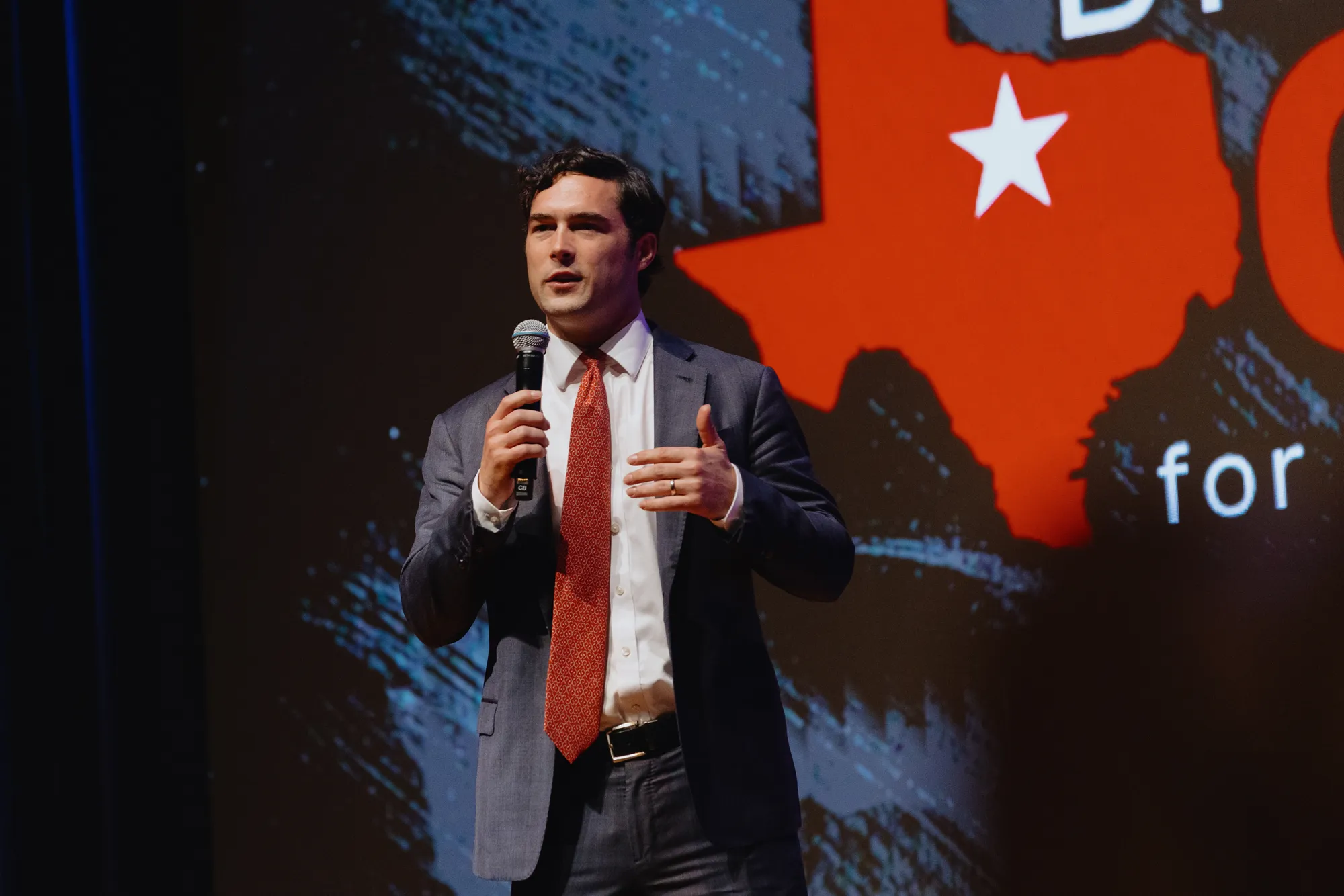
Rep. Brandon Gill, the Republican congressman from Texas, is drawing attention for the scale of his campaign fundraising and his reported financial support for other Republican candidates and the National Republican Congressional Committee as the 2026 midterm elections approach.
Federal Election Commission records show Gill’s campaign had reported approximately $4.22 million in total receipts for the 2025–26 election cycle through June 30, 2026. His campaign reported more than $3.76 million in contributions during that period, with individual contributions accounting for the largest share.
The fundraising figures place Gill among the Republican members using their campaign operations not only to support their own reelection efforts but also to participate in the broader financial infrastructure surrounding the House majority.
Gill’s Fundraising Operation
Gill represents Texas’ 26th Congressional District and is seeking another term in the House.
According to FEC records, his campaign reported roughly $4.22 million in receipts through June 30. The filings show approximately $3.38 million came from individual contributors, while the campaign reported more than $2.93 million in total disbursements during the same period.
The campaign also reported approximately $1.41 million in cash on hand at the end of the reporting period.
These figures provide a clearer picture of Gill’s campaign finances than a single fundraising headline because they distinguish between money raised, money spent and cash remaining available for future political activity.
Support for Other Republican Campaigns
Gill has also been involved in political fundraising beyond his own campaign.
The broader Republican campaign operation is increasingly focused on directing money toward competitive House races as Election Day approaches.
The National Republican Congressional Committee (NRCC), the campaign organization responsible for supporting Republican House candidates, has been expanding its spending operation ahead of the November elections.
The NRCC raised $13.5 million in August, according to Axios, giving House Republicans a reported $13 million cash advantage over their Democratic counterpart at that point in the campaign.
The committee has also begun making significant coordinated expenditures in individual House races following a Supreme Court decision that changed the legal framework surrounding coordinated party spending.
A Changing Campaign-Finance Landscape
The financial environment surrounding the 2026 midterms has changed significantly following a Supreme Court ruling in June.
Reuters reported that the decision removed federal limits on certain coordinated campaign spending between national political parties and candidates. Republican committees subsequently increased their spending substantially in House and Senate races.
According to Reuters, Republican committees spent nearly $56 million in coordinated efforts during July and August, compared with less than $6 million by their Democratic counterparts during the same period.
The change gives national party organizations greater flexibility in coordinating spending with candidates, although legal and political debates surrounding campaign-finance rules continue.
Why Member-to-Member Fundraising Matters
Members of Congress can play a role in helping their party’s broader fundraising network.
When lawmakers contribute to other campaigns or party committees, the money can help finance advertising, voter outreach, field operations and other election-related activities.
For the party leadership, contributions from incumbent lawmakers can also help demonstrate that members are participating in the broader effort rather than concentrating entirely on their own districts.
Gill’s reported political activity therefore comes within a much larger Republican fundraising strategy focused on protecting existing House seats while competing in districts where control of the chamber could be contested.
Gill’s Political Profile
Gill was elected to Congress from Texas’ 26th District in 2024 and has become a prominent Republican voice in the House.
His political profile has included strong support for conservative positions on immigration, federal spending and other issues central to the Republican agenda.
However, fundraising totals alone do not determine legislative influence or election outcomes.
The more measurable question is how campaign resources are ultimately deployed and whether contributions to other candidates translate into meaningful support for those campaigns.
The Bigger House Majority Battle
The financial activity surrounding Gill comes as both parties prepare for the final stage of the 2026 midterm campaign.
The NRCC has been aggressively building its financial position. In October, NRCC Chairman Richard Hudson announced that the committee’s 2026 President’s Dinner raised a record $36.8 million for the NRCC, affiliated political efforts and Republican candidates.
The committee has also moved toward earlier and more extensive spending in competitive districts.
Axios reported in September that the NRCC had begun using coordinated advertising in more than 20 congressional races, illustrating the importance national Republicans are placing on protecting and expanding their House position.
What Gill’s Numbers Show
Gill’s fundraising record demonstrates that his campaign operation has attracted substantial financial support during the current election cycle.
The official FEC data, however, also shows why individual figures should be placed in context. Through June 30, the campaign had raised about $4.22 million, while spending nearly $2.93 million and retaining approximately $1.41 million in cash.
Whether additional transfers or fundraising reported after June 30 change those totals will become clearer as newer FEC filings are processed.
The broader political significance is that fundraising has become an increasingly important component of the 2026 House campaign, with national committees and individual lawmakers directing resources toward races that could determine control of Congress.
As Election Day approaches, Gill’s fundraising activity will remain one part of a much larger Republican effort to finance candidates, defend vulnerable seats and compete across the national House map.