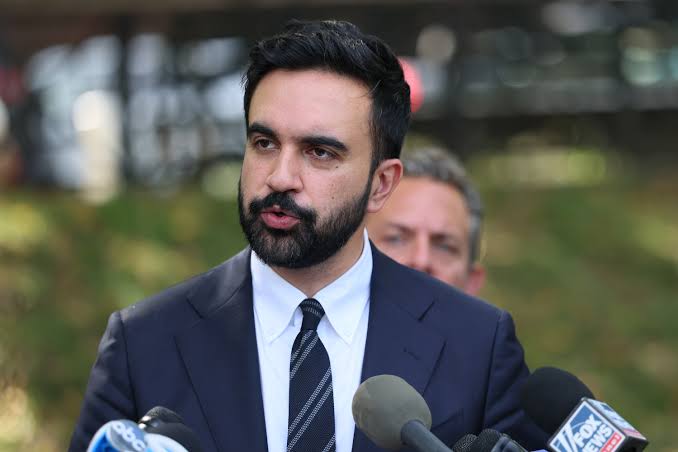
new York mayor
New York City Mayor Zohran Mamdani has sharply criticized President Donald Trump’s immigration enforcement policies after a federal Immigration and Customs Enforcement (ICE) agent shot and wounded a man in Manhattan, setting off protests and intensifying an already contentious political dispute.
The incident occurred on October 8 in the Marble Hill neighborhood, where federal agents were attempting to arrest a 28-year-old Dominican man identified by authorities as Oscar Belgal. A five-year-old child was reportedly inside the vehicle when the shooting occurred. The child was not physically injured, according to officials.
Mamdani condemned the shooting and called for an end to ICE enforcement operations in New York City. He also revealed that he had spent approximately two hours speaking with Trump and Homeland Security Secretary Markwayne Mullin in an unsuccessful effort to secure the man’s release.
The confrontation has created a new test for the relationship between the Democratic mayor and the Republican president, whose political differences have not prevented them from communicating directly. The shooting, however, has brought their disagreement over immigration enforcement into sharper focus.
Mamdani Delivers Forceful Criticism of ICE
Speaking to reporters after the shooting, Mamdani expressed anger over what happened and argued that the incident demonstrated the dangers of the administration’s immigration enforcement approach.
The mayor accused ICE of operating without sufficient accountability and said the presence of federal agents was making communities feel less safe. His remarks reflected his broader opposition to aggressive immigration raids, particularly in neighborhoods where families and children may be affected.
Mamdani has repeatedly presented New York as a city built by immigrants and pledged to protect its immigrant communities. His response to the shooting was consistent with that position, but the incident placed him under immediate pressure to demonstrate that his administration could challenge federal actions rather than simply criticize them.
He also made clear that he wanted ICE operations halted across the city. His demand was not limited to an investigation of the individual shooting; it reflected a wider disagreement with the agency’s role in local communities.
What Happened During the Bronx-Area Operation?
Federal authorities said ICE agents were conducting a targeted enforcement operation when they encountered Belgal in his vehicle in Marble Hill, a neighborhood in northern Manhattan near the Bronx.
According to the Department of Homeland Security, the man was the subject of the arrest operation and had a prior criminal conviction. Officials said he did not comply with agents’ instructions and accelerated the vehicle, striking government vehicles before officers opened fire.
ICE officials defended the agents’ actions, arguing that they believed they faced a threat. Homeland Security Secretary Markwayne Mullin later said officers did not know a young child was in the vehicle when the shooting occurred.
However, the circumstances surrounding the shooting have prompted questions from local officials and members of the public. Video footage documented parts of the chaotic aftermath, but the available material did not independently establish every detail of what happened immediately before the shots were fired.
The man suffered a wound to the neck and received medical treatment. Authorities said the child was physically unharmed, although Mamdani raised concerns about the emotional impact of witnessing such an incident.
The competing accounts from federal officials and city leaders have made a thorough examination of the available evidence particularly important.
Two-Hour Conversation With Trump Fails to Secure Release
One of the most politically significant developments came after the shooting, when Mamdani disclosed that he had spent about two hours on the phone with Trump and Homeland Security Secretary Mullin.
The mayor said he was trying to negotiate the release of the wounded man. Despite the lengthy conversation, the effort was unsuccessful.
Mamdani told reporters that federal authorities subsequently transferred the man from the hospital into an unmarked vehicle and took him into custody. The development underscored the limits of the mayor’s ability to influence a federal immigration operation, even through direct communication with the president.
The failed effort also highlighted a central tension in the relationship between the two leaders. Direct talks may allow them to communicate during a crisis, but those conversations do not necessarily produce agreement on policy or enforcement decisions.
For Mamdani, the outcome created a difficult political situation. He had publicly condemned the shooting and attempted to intervene, yet federal authorities continued with their custody process.
For the Trump administration, the case became another opportunity to defend its immigration enforcement agenda while challenging New York’s approach to cooperation with federal authorities.
Trump Administration Defends Federal Agents
Federal officials pushed back against the criticism, defending the agents involved and arguing that the circumstances of the operation must be considered before conclusions are drawn.
Mullin said officers believed they faced danger when the vehicle moved toward them. Other federal officials also maintained that the operation targeted a person with a prior criminal record.
The administration has consistently argued that stricter immigration enforcement is necessary to carry out federal law and protect public safety. Trump has made deportations a central part of his agenda, while his administration has criticized local policies that limit cooperation between municipal agencies and federal immigration authorities.
Following the shooting, federal officials also directed criticism toward New York’s sanctuary policies. These policies generally restrict the circumstances in which local agencies cooperate with federal immigration authorities, although they do not prevent the federal government from carrying out its own enforcement operations.
The disagreement illustrates how an individual enforcement incident can become part of a much larger debate over immigration, public safety, local authority and federal power.
Why New York’s Sanctuary Policies Matter
New York City has long maintained policies intended to limit local involvement in federal civil immigration enforcement. Supporters argue that these rules help immigrant residents report crimes, access services and communicate with local authorities without fearing that every interaction could lead to immigration consequences.
Critics, including officials in the Trump administration, argue that restrictions on cooperation can make it more difficult for federal authorities to locate and detain people they consider enforcement priorities.
The shooting has brought those competing arguments back into the spotlight.
Mamdani’s position is that aggressive federal operations can undermine public confidence and place residents at risk. The administration’s position is that federal officers must be able to carry out lawful arrests and respond when they believe their safety is threatened.
Those questions are likely to remain central as investigators examine the shooting and officials debate how immigration enforcement should operate in New York.
A Political Relationship Under New Strain
The incident is also significant because Mamdani and Trump have maintained direct contact despite their sharply different political views.
That relationship attracted attention as the mayor sought to work with the president on issues affecting New York. The latest dispute, however, demonstrates that communication alone cannot resolve the fundamental policy disagreements between them.
Mamdani’s unsuccessful attempt to secure the man’s release may reinforce concerns among critics who question how much influence the mayor can exercise over federal decisions. Supporters, meanwhile, may view his public response as evidence that he is willing to confront the administration over issues affecting