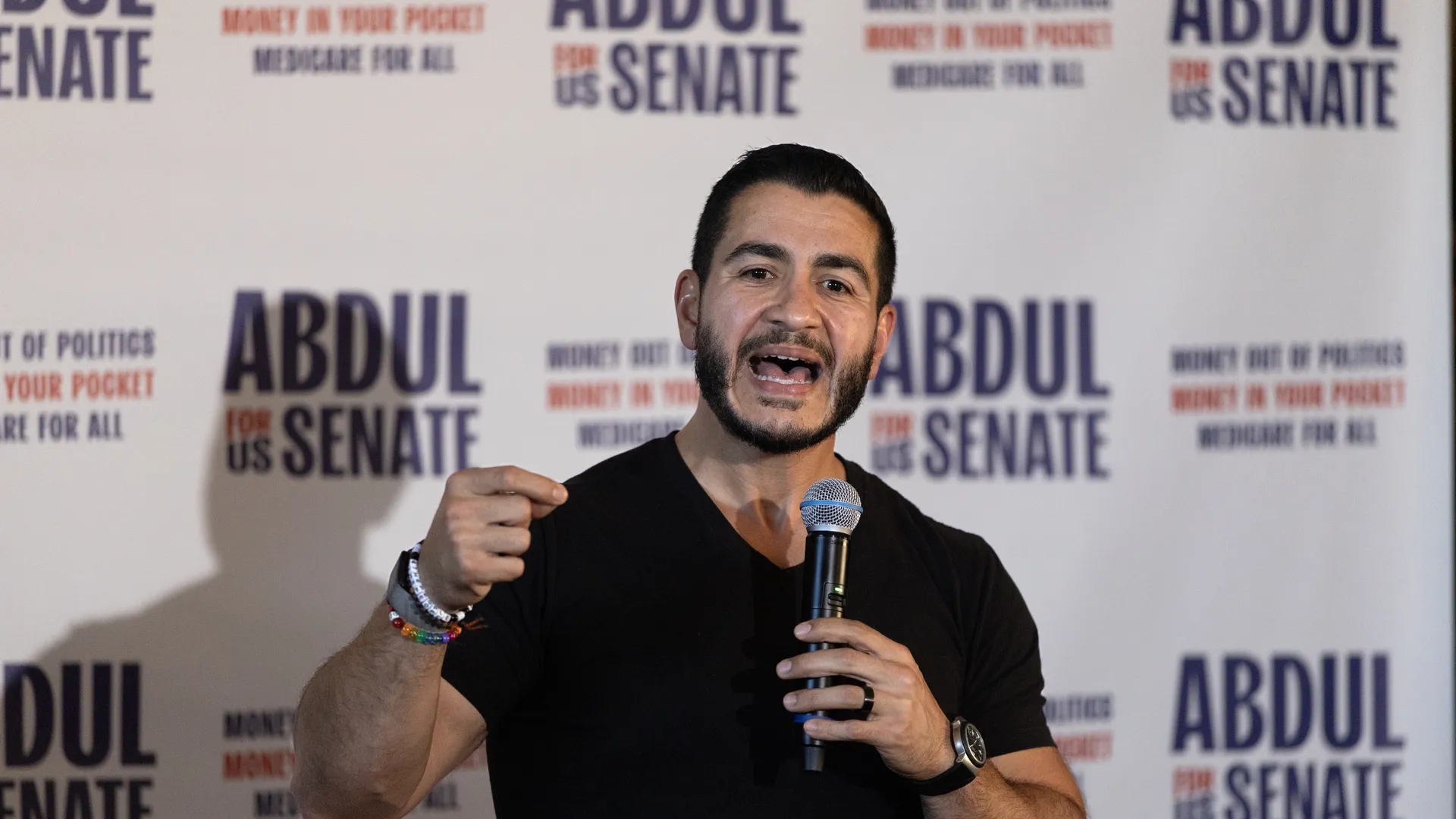
Michigan Democratic Senate candidate Abdul El-Sayed is facing renewed questions about his citizenship history after a newly surfaced 2016 video appeared to show him publicly describing himself as a dual citizen of the United States and Egypt.
The video, reported by the Washington Free Beacon on October 5, 2026, shows El-Sayed speaking at a medical conference in Detroit while serving as the city’s health director. During the event, he said, “I carry dual citizenship,” while discussing his childhood experiences visiting Egypt.
The revelation has drawn attention because El-Sayed’s campaign has previously said that he has never actually held Egyptian citizenship.
What El-Sayed Previously Said
The newly reported video is significant because it appears to document El-Sayed making the dual-citizenship statement publicly years before his current Senate campaign.
According to the Free Beacon, the 2016 remarks are at least the second documented instance in which El-Sayed identified himself as having Egyptian citizenship.
A résumé associated with El-Sayed from 2014, when he was working in academia, reportedly listed his citizenships as “USA, Egypt.” The résumé was published on an academic networking platform and was later removed from the site, according to the report.
The documents and video have prompted questions about why El-Sayed previously described himself as an Egyptian citizen if he was not legally recognized as one.
Campaign Says El-Sayed Was Mistaken
El-Sayed’s campaign has disputed the idea that he ever held dual citizenship.
Campaign spokeswoman Roxie Richner previously told the Free Beacon that El-Sayed is “not a dual citizen by any verifiable metric and never has been.”
According to the campaign’s explanation, El-Sayed was told as a child that his grandfather had pursued Egyptian citizenship for him because he was eligible through his parents, who were born in Egypt.
The campaign says that information was passed down through family members and that El-Sayed later attempted to verify it. According to Richner, neither El-Sayed nor his family could locate documentation confirming Egyptian citizenship.
The campaign therefore characterizes the previous citizenship statements as an error based on information El-Sayed had received from relatives.
Why the 2016 Video Is Drawing Attention
The newly surfaced video adds another piece of evidence to a question that had already emerged earlier this year.
The 2014 résumé reportedly identified El-Sayed as a citizen of both the United States and Egypt. The 2016 video then appears to show him using similar language when describing his citizenship publicly.
The campaign’s current explanation is that El-Sayed believed the information he had received from his family was accurate but later discovered that it could not be verified.
That creates a distinction between what El-Sayed previously believed or represented about his status and whether he was legally an Egyptian citizen.
The available reporting does not establish that El-Sayed legally held Egyptian citizenship. His campaign explicitly denies that he ever did.
El-Sayed’s Egyptian Family Background
El-Sayed was born in Michigan in 1984 to a family with Egyptian roots.
His father, Muhammad El-Sayed, immigrated from Egypt to Michigan in the late 1970s. El-Sayed has frequently discussed his father’s decision to come to the United States and his own experiences visiting Egypt while growing up.
During his 2016 remarks, El-Sayed also discussed spending summers in Egypt and described being questioned by Egyptian authorities after criticizing former Egyptian President Hosni Mubarak, according to the newly reported video.
His family background and childhood experiences in Egypt have also been part of his public biography and political messaging.
The Issue Enters a Competitive Senate Campaign
The citizenship controversy comes as El-Sayed prepares for the general election in Michigan’s open U.S. Senate race.
El-Sayed won the Democratic nomination after defeating Rep. Haley Stevens in a closely watched primary. He now faces Republican former Rep. Mike Rogers in the November election.
The race has attracted national attention because Michigan is an important battleground and the Senate contest could contribute to determining control of the chamber.
Former President Barack Obama is scheduled to campaign with El-Sayed in Detroit on October 24, alongside Democratic gubernatorial nominee Jocelyn Benson and other candidates.
What Voters Are Being Asked to Consider
The citizenship issue raises questions about the accuracy and context of statements El-Sayed made before entering the current Senate race.
The campaign maintains that he was never a dual citizen and that his earlier statements resulted from incorrect information he received from family members.
The newly surfaced video and the earlier résumé, meanwhile, provide evidence that El-Sayed himself publicly described his status differently at the time.
Those are separate questions: whether El-Sayed legally possessed Egyptian citizenship and why he previously believed or stated that he did.
As the campaign continues, voters can consider the available documentation, the candidate’s explanation and any additional evidence that may emerge.
A Broader Test of Transparency
The controversy highlights the scrutiny candidates face when past statements, résumés or public records become relevant during a major election campaign.
For El-Sayed, the issue arrives at a particularly important point in the Michigan Senate race, with national Democratic figures increasingly involved in his campaign and Election Day approaching.
Whether the matter becomes a significant campaign issue will depend in part on how voters evaluate the conflicting accounts and whether additional documentation clarifies El-Sayed’s citizenship history.
For now, the central facts remain disputed: past materials and a newly surfaced video show El-Sayed describing himself as an American and Egyptian citizen, while his campaign says he never legally held Egyptian citizenship and that the earlier claims were based on information provided by family members.