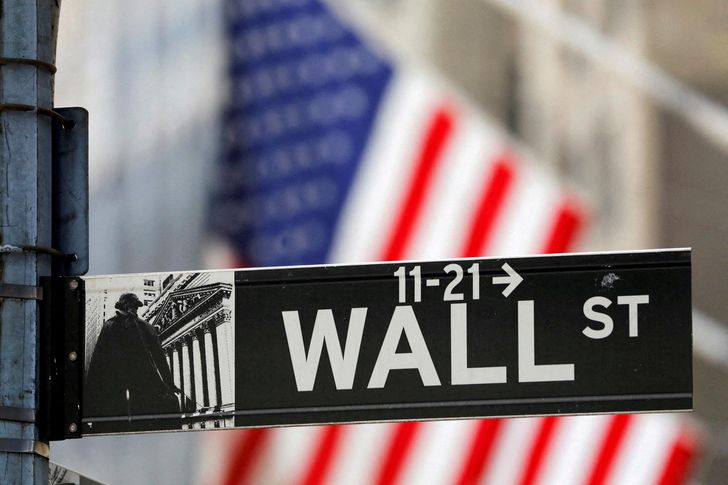
U.S. stocks moved sharply higher Friday, with the major indexes closing near record levels after a weaker-than-expected jobs report eased concerns that a strong economy could push inflation higher and force the Federal Reserve to raise interest rates again.
The September employment report showed that U.S. employers added just 29,000 jobs, well below economists’ expectations for roughly 90,000 new jobs. August’s job growth was also revised lower, from 162,000 to 133,000.
The softer labor-market data immediately changed expectations surrounding the Federal Reserve’s next policy decision, helping stocks recover from a turbulent period in financial markets.
S&P 500 Moves Back Toward Record Territory
The S&P 500 gained 0.7%, adding 56.27 points to finish at 7,722.72. The index ended the session less than 1% below its record high reached in August.
The Nasdaq Composite climbed 1.2%, gaining 319.27 points to close at 27,190.86.
The Dow Jones Industrial Average added 250.40 points, or 0.5%, finishing at 51,176.96.
The Russell 2000, which tracks smaller U.S. companies, also benefited from the shift in interest-rate expectations and gained approximately 0.9%.
The gains came despite continued uncertainty in bond and energy markets.
Weak Jobs Data Changed Rate Expectations
The biggest market reaction came from the implications of the employment report for Federal Reserve policy.
A slower pace of hiring reduces some of the concern that the U.S. economy is overheating and generating additional inflation pressure.
Before the report, traders had been significantly more concerned about another rate increase. Following the employment data, expectations for a Federal Reserve rate hike at the end of October fell sharply.
Reuters reported that markets were pricing in roughly a 22.7% probability of an October rate increase, compared with 64.2% a week earlier.
That shift helped support stocks because lower expected interest rates can reduce borrowing costs and make equities more attractive relative to fixed-income investments.
The Bond Market Remained Volatile
Although the jobs report initially pushed Treasury yields lower, the bond market did not remain calm throughout the session.
The benchmark 10-year Treasury yield briefly fell below 5.17% after the employment report before recovering later in the day.
Reuters reported that the 10-year yield eventually moved back above 5.28%.
The rebound reflected continuing concerns about inflation, government debt and higher energy prices.
The bond market has been under pressure in recent weeks, with longer-term Treasury yields reaching levels not seen in many years.
Why the Jobs Report Mattered So Much
The employment figures created a complicated picture for investors.
On one hand, slower hiring can reduce inflationary pressure and make another immediate rate increase less likely.
On the other hand, an unusually weak employment number can raise concerns about the underlying strength of the economy.
That tension explains why investors responded positively to the report but remained cautious.
Vanguard senior economist Adam Schickling said the data supported a patient approach by the Federal Reserve because the labor market had neither deteriorated sharply nor shown significant strengthening.
The report therefore gave markets a reason to reassess interest-rate expectations without necessarily indicating a severe economic downturn.
Technology Stocks Helped Lead the Rally
Large technology companies were among the biggest contributors to Friday’s gains.
Nvidia rose 1.3%, making it the strongest individual contributor to the S&P 500’s advance.
Tesla also performed strongly, climbing 4.7% after the electric-vehicle manufacturer reported quarterly deliveries that exceeded analysts’ expectations.
The performance of major technology companies was particularly important because their large market capitalizations give them significant influence over the broader S&P 500.
Lower interest-rate expectations can also benefit high-growth technology companies because investors place greater value on future earnings when borrowing costs and market yields decline.
Small-Cap Stocks Also Benefited
The shift in interest-rate expectations was not limited to major technology companies.
The Russell 2000 gained about 0.9%, marking its strongest daily performance in roughly a month.
Smaller companies can be particularly sensitive to interest rates because they often depend more heavily on borrowing and domestic economic conditions.
Real-estate stocks also benefited, with the S&P 500 real-estate sector gaining around 0.4%.
Nike Moves in the Opposite Direction
Not every major company benefited from Friday’s market rally.
Nike shares fell 3.6%, making the athletic-apparel company one of the weakest performers in the Dow.
The decline came after Nike reported stronger-than-expected quarterly profit but weaker revenue and issued a disappointing outlook for the fiscal year.
The company also announced job cuts and changes to its global business structure.
Oil Prices Remain a Major Market Variable
Energy prices continued to create uncertainty for investors.
Brent crude moved sharply during Friday’s session, trading around the $98-to-$103 range before settling near $102.25 per barrel, according to AP.
Higher oil prices can complicate the Federal Reserve’s fight against inflation because energy costs influence transportation, manufacturing and consumer prices.
That means investors are watching both labor-market data and energy prices closely when assessing the path of interest rates.
Stocks Finish Higher, but Investors Remain Cautious
Despite Friday’s rally, the week as a whole was mixed.
The S&P 500 declined about 0.27% for the week, while the Dow fell 1.26%. The Nasdaq, however, gained approximately 0.45%, recording its fifth weekly advance in the past six weeks.
The contrast shows how quickly market sentiment can change as investors respond to new economic data.
Friday’s jobs report reduced immediate fears of another Federal Reserve rate increase, giving stocks room to rebound.
But inflation, government borrowing, oil prices and global bond-market volatility remain important risks for investors.
What Comes Next for Wall Street?
Markets will now turn their attention to upcoming inflation and economic data as investors attempt to determine whether the Federal Reserve will keep interest rates unchanged or consider another increase later in the year.
For now, the latest jobs report has provided some relief to stock investors by reducing expectations for an immediate rate hike.
At the same time, the unusually weak hiring number means markets will continue watching the labor market for signs of whether the slowdown is temporary or part of a broader economic shift.
Friday’s session therefore offered a clear message: weaker economic data can sometimes support stocks when it reduces expectations for higher interest rates—but the same weakness can also raise questions about economic growth.
For Wall Street, that delicate balance between inflation, employment, interest rates and economic growth is likely to remain the dominant theme heading into the next round of Federal Reserve decisions.