Millions of children across the United States have been automatically enrolled in a new investment program designed to give young Americans an early start in building long-term savings.
The development marks a major expansion of the program known as Trump Accounts, which are tax-advantaged investment accounts established for eligible children under 18. The U.S. Treasury says automatic enrollment has now created accounts for more than 60 million additional children, bringing the total number of accounts to nearly 70 million.
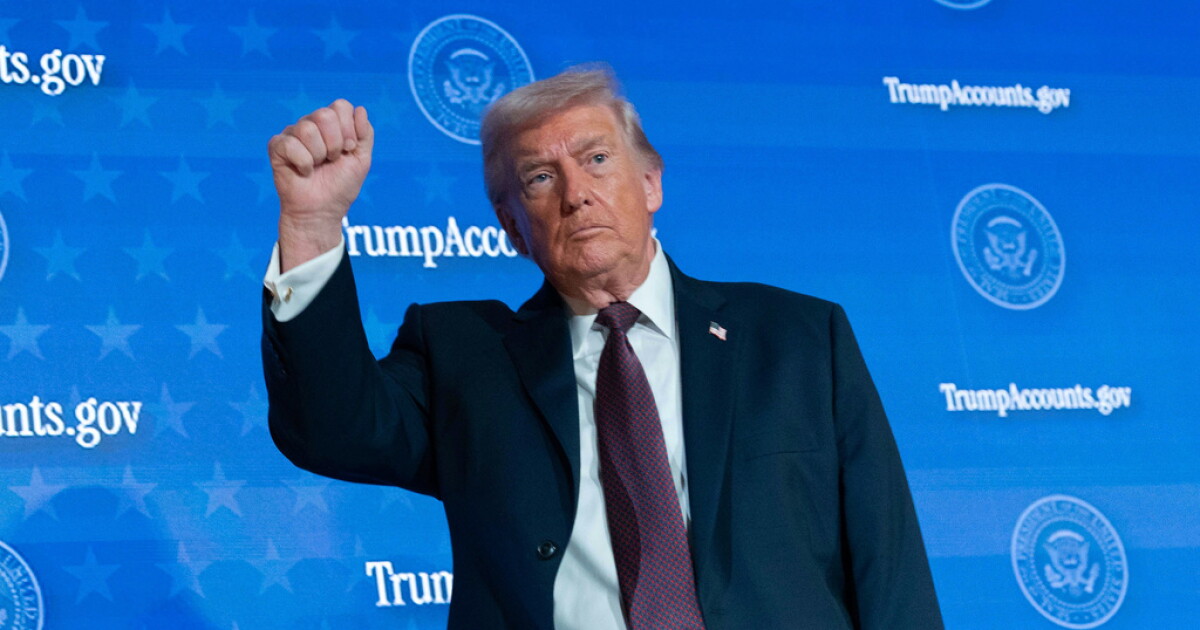
President Donald Trump highlighted the expansion at the White House on October 7, encouraging parents and guardians to claim the accounts created for their children.
What Are Trump Accounts?
Trump Accounts are investment accounts held in a child’s name. Under the program’s rules, they are a form of traditional IRA with special provisions that apply while the child is under 18.
The accounts are intended to allow money to be invested for the long term, potentially giving children an opportunity to accumulate savings before they reach adulthood. Current investment options are generally tied to low-cost funds or ETFs that track broad U.S. stock-market indexes.
The program was created as part of federal legislation enacted in 2025, and the Treasury began implementing the accounts in 2026.
Automatic Enrollment Changes the Scale of the Program
One of the biggest changes came in October 2026, when the Treasury began automatically establishing accounts for eligible children who did not already have one.
Before automatic enrollment, participation depended largely on parents or guardians taking action to establish an account. The Treasury’s new system means an eligible child can now have an account created without the family first completing that step.
The White House says nearly 70 million accounts have now been created, including more than 60 million through automatic enrollment.
However, automatic creation does not mean parents can simply ignore the account.
Parents or guardians still need to claim the account if they want to manage it, allow contributions from family and friends, and access certain benefits.
Who Can Receive the $1,000 Government Contribution?
A major feature of the program is a one-time $1,000 federal contribution for eligible children.
The payment applies to U.S. citizens born between January 1, 2025, and December 31, 2028, provided the applicable eligibility requirements are met.
The Treasury has emphasized that parents or guardians must claim the child’s account and make the required election to receive the $1,000 contribution.
That means families with eligible children should not assume that automatic enrollment alone guarantees the $1,000 deposit.
Why Automatic Enrollment Matters
Supporters of automatic enrollment argue that requiring families to actively sign up can leave out children whose parents have less time, financial knowledge or access to investment services.
Economists and researchers who study children’s asset-building programs have argued that automatic enrollment can broaden participation beyond families who are already familiar with investing.
The Washington Post reported that the number of children with accounts increased from roughly 10 million before automatic enrollment to about 70 million afterward, according to White House figures.
The broader goal is to give children an early financial asset that could potentially be used later in life for purposes such as education, starting a business, purchasing a home or building retirement savings.
Families Still Have to Take Action
Although accounts are being created automatically, parents and guardians still have an important role.
The Treasury says parents must claim an automatically created account to manage it and allow family members, friends and employers to contribute. Claiming the account also allows eligible children to receive the federal $1,000 seed contribution.
The official process involves verifying the parent’s or guardian’s identity and relationship to the child.
Families should use official government resources rather than unofficial websites or social-media links when checking eligibility or claiming an account.
Companies and Donors Can Also Contribute
Another major aspect of Trump Accounts is the role of private donors, employers and other organizations.
The White House says billions of dollars have already been deposited into Trump Accounts since the program launched, including government seed contributions, money from families and friends, and philanthropic donations.
One of the largest announced philanthropic contributions has come from Michael and Susan Dell, who committed billions of dollars to provide additional contributions for children in lower-income communities. The Washington Post reported that their contribution is expected to support $250 deposits for millions of children.
The automatic-enrollment structure is also intended to make it easier for large donors to contribute to groups of eligible children.
New Rules Allow Certain Stock Contributions
Recent Treasury regulations also address contributions involving individual publicly traded stocks.
Under the new framework, qualifying corporate donors can contribute certain individual stocks to Trump Accounts under specified conditions. The rules require those donated stocks to remain invested for a five-year period and do not allow parents or children to reject the stock contribution.
This could create an additional source of funding for children’s accounts, but it also introduces investment-concentration concerns.
A diversified investment fund spreads money across many companies, while owning a single company’s stock exposes an investor more heavily to that company’s performance.
Treasury has acknowledged this additional risk while arguing that allowing stock contributions could encourage more corporate giving.
How Much Can Be Contributed?
Trump Accounts also allow additional contributions beyond the federal seed payment.
The rules provide for an annual contribution limit, with the current framework setting a general limit of $5,000 per child per year, subject to applicable rules and future inflation adjustments. The $1,000 pilot-program contribution is treated separately from that annual contribution limit.
Money placed into the accounts can potentially grow over many years through investment returns.
However, investment returns are not guaranteed, and the value of investments can rise or fall with the market.
What Happens When the Child Turns 18?
Trump Accounts have special rules while a child is under 18.
Once the child reaches adulthood, many of the special provisions end and traditional IRA rules generally become applicable.
This means the accounts are designed primarily as long-term financial assets rather than ordinary savings accounts that families can freely spend whenever they choose.
Parents should therefore understand the withdrawal and tax rules before treating the account as a replacement for other savings options.
A New Approach to Children’s Wealth Building
The automatic enrollment of tens of millions of American children represents a significant expansion of the federal government’s approach to children’s investing.
The program combines government contributions for certain newborns, private donations, family contributions and investment growth in accounts established in children’s names.
Supporters see automatic enrollment as a way to broaden access to long-term investing, particularly among families that may not otherwise participate.
Critics and financial experts, meanwhile, have pointed to the program’s restrictions, investment risks and the fact that other financial tools may be more appropriate for some families depending on their goals.
For parents, the most immediate issue is straightforward: an account may already exist in their child’s name, but the family still needs to claim it to take control and access the program’s available benefits.
Families considering the program should review the official rules and understand the tax, investment and withdrawal requirements before making additional contributions.
Bottom Line
The October 2026 automatic-enrollment expansion has transformed Trump Accounts from a relatively limited program into a system covering tens of millions of American children.
Nearly 70 million accounts have now been created, according to the White House, while the Treasury says automatic enrollment gives eligible children an account that can be claimed by their parents or guardians.
For eligible children born from 2025 through 2028, the program also offers the possibility of a one-time $1,000 federal contribution.
The long-term impact will depend on how many families claim their accounts, how much additional money flows into them and how investments perform over the years.