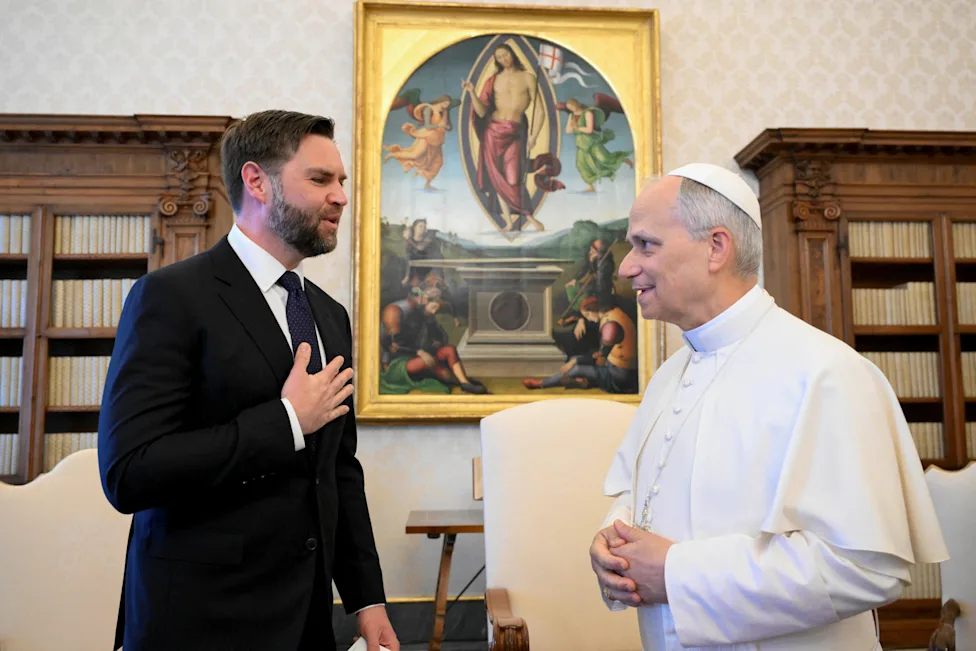
Pope Leo XIV has renewed his opposition to the death penalty as controversy grows in the United States over the military’s plan to livestream the scheduled execution of a convicted Fort Hood shooter.
The pope delivered his message on Saturday, October 10, marking the World Day Against the Death Penalty. He emphasized the dignity of human life and argued that justice can be served without putting convicted individuals to death.
Although Pope Leo did not directly mention the Pentagon’s livestream plan, his statement came amid mounting criticism from religious leaders, lawmakers and others who have questioned whether broadcasting an execution would turn a serious legal punishment into a public spectacle.
Pope Leo Says Death Penalty Violates Human Dignity
In a message shared through his official social media account, Pope Leo said capital punishment attacks the dignity of the human person and removes the possibility of redemption.
The pope also argued that public safety and justice can be achieved through detention systems that protect society without permanently taking away a person’s life.
His position reflects the Catholic Church’s official teaching, revised under Pope Francis in 2018, which declares the death penalty inadmissible.
The pope’s comments reinforce the Church’s longstanding opposition to capital punishment and its emphasis on human dignity, even when a person has been convicted of a serious crime.
Pentagon’s Livestream Plan Sparks Controversy
The controversy intensified after Defense Secretary Pete Hegseth announced that the U.S. military planned to livestream the scheduled execution of Nidal Malik Hasan.
Hasan, a former Army psychiatrist, was convicted in connection with the 2009 Fort Hood shooting in Texas, which killed 13 people and wounded 32 others.
The execution is scheduled for December 3 and is expected to be carried out by firing squad. If the livestream proceeds, it would mark an unprecedented broadcast of a U.S. military execution.
President Donald Trump has said he has not yet decided whether to authorize the livestream. Vice President JD Vance has also expressed doubts about whether the broadcast will take place, saying he would not watch it.
The proposal has prompted questions about the purpose of broadcasting an execution and whether such a decision serves justice or risks turning a person’s death into a public spectacle.
Catholic Leaders Push Back Against the Proposal
Pope Leo is not the only prominent Catholic figure to criticize the plan.
Cardinal Pietro Parolin, the Vatican’s secretary of state, described the idea of livestreaming an execution as unacceptable, arguing that death should not be turned into a spectacle.
Archbishop Paul Coakley, president of the U.S. Conference of Catholic Bishops, also condemned the proposal and urged officials to reconsider it.
Their statements reflect the Catholic Church’s broader opposition to capital punishment, which is based on the belief that every human life retains dignity and that people should not be denied the possibility of redemption.
The criticism has added a religious and ethical dimension to a debate that already involves military policy, criminal justice and the limits of government authority.
Death Penalty Debate Returns to the Spotlight
The livestream controversy comes as the United States faces renewed debate over capital punishment following a botched lethal injection in Tennessee.
Americans remain divided over the death penalty. Some view it as an appropriate punishment for the most serious crimes, while others question its effectiveness, fairness and the risk of executing an innocent person.
The prospect of broadcasting a military execution has added another issue to that debate: whether making an execution visible to the public promotes accountability or crosses an ethical line.
While supporters and opponents disagree over capital punishment itself, the proposed livestream has drawn criticism from people with differing views on the death penalty.
What Happens Next?
The planned execution of Nidal Malik Hasan is scheduled for December 3, but President Trump has not made a final decision on whether the livestream will be authorized.
Pope Leo’s latest remarks have added to the growing pressure on U.S. officials to reconsider the broader implications of capital punishment and the public broadcasting of executions.
For now, the debate remains unresolved. The coming weeks could bring further reactions from political leaders, religious authorities and advocates on both sides of the death penalty issue.
The controversy highlights a difficult question facing the country: how can the government pursue justice for victims and protect public safety while respecting human dignity?