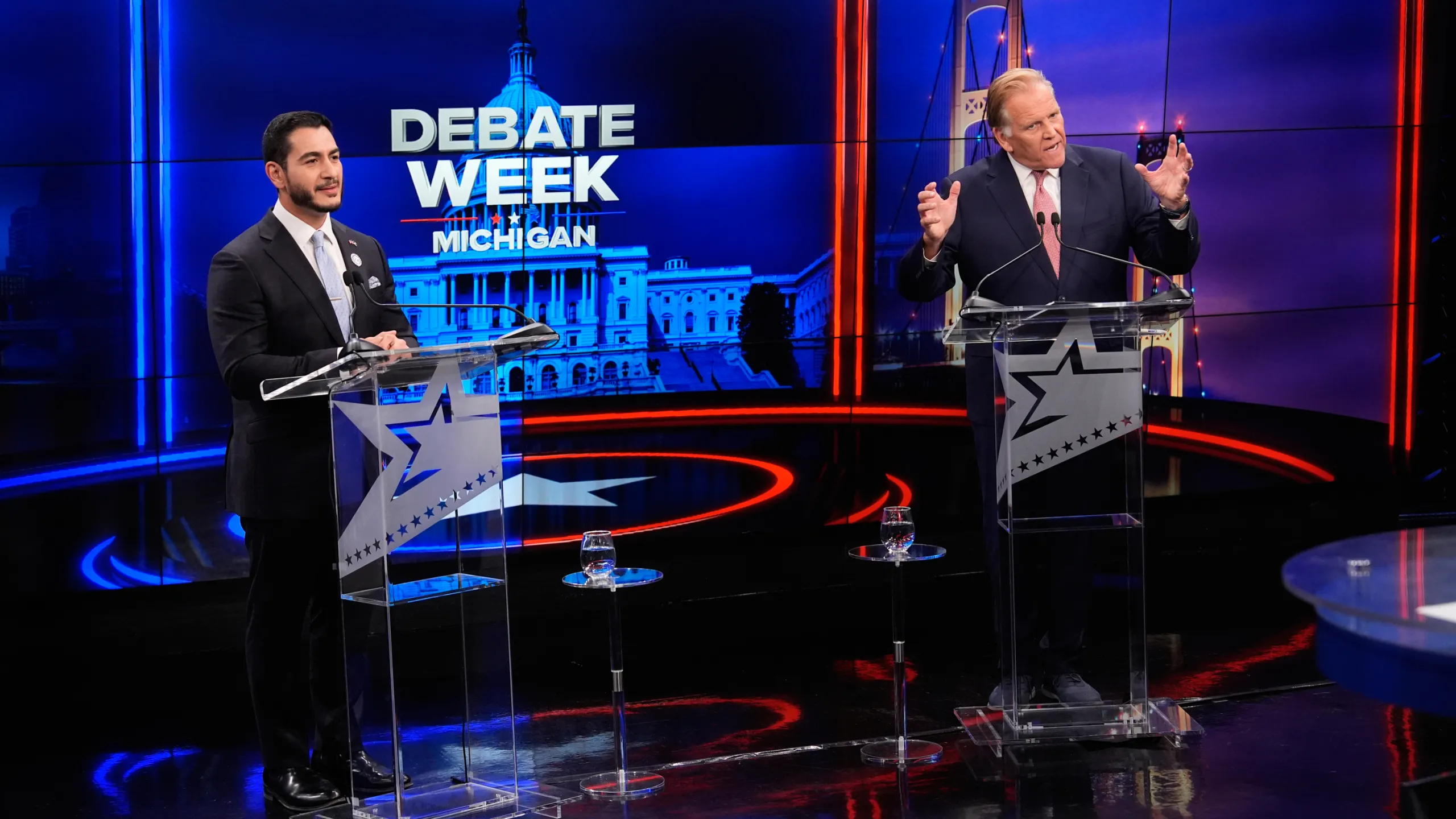
The Michigan Senate race took a contentious turn as Democratic nominee Abdul El-Sayed and Republican candidate Mike Rogers faced off in their first televised debate, exchanging sharp personal attacks while clashing over major issues facing American voters.
The debate, held in Grand Rapids on October 8, covered healthcare, immigration enforcement, the war involving Iran, U.S. support for Israel, trade with Canada and the rising cost of living. Frequent interruptions and accusations made it difficult at times for the moderator to keep the discussion on track.
Personal Attacks Take Center Stage
El-Sayed repeatedly portrayed Rogers as too closely aligned with President Donald Trump and criticized his opponent’s positions on economic policy and the administration’s agenda.
Rogers, meanwhile, challenged El-Sayed over his political views and alleged connections involving people and organizations he considers controversial. One particularly tense exchange involved Rogers suggesting that El-Sayed’s family could have links to a terrorism watch list. El-Sayed pushed back, demanding that Rogers state his implication directly.
Some claims raised during the debate require important context. Reporting and fact-checking have noted that allegations involving relatives or associated organizations do not, by themselves, establish wrongdoing by El-Sayed.
Iran War and Israel Aid Divide the Candidates
Foreign policy emerged as one of the debate’s central disputes. Both candidates said the war involving Iran should come to an end, but they disagreed over the conflict and America’s role in the region.
El-Sayed criticized the war and argued that its consequences were contributing to economic pressures, including higher energy costs. Rogers defended aspects of the military campaign while also saying the conflict needed to end.
The candidates also clashed over U.S. military assistance to Israel. El-Sayed argued that federal resources should prioritize domestic needs such as healthcare, education and childcare rather than continued military aid to Israel. Rogers defended Israel’s right to protect itself and supported maintaining the relationship between the two countries.
Immigration Enforcement Becomes Another Flashpoint
The candidates also discussed the Trump administration’s immigration crackdown and the tactics used by federal enforcement agencies.
Rogers criticized aspects of highly confrontational operations, saying enforcement actions should be conducted in a way that minimizes disruption to surrounding communities. At the same time, he defended the administration’s broader focus on removing dangerous criminals.
El-Sayed took a much stronger position against Immigration and Customs Enforcement, arguing that the agency’s current approach has harmed communities. Their exchange highlighted a broader disagreement over immigration policy, civil liberties and the federal government’s enforcement powers.
Trade, Healthcare and Everyday Costs
Trade with Canada was particularly relevant to Michigan, where cross-border commerce and manufacturing play important economic roles. El-Sayed attacked Rogers over past trade policies and his relationship with Trump, while Rogers said he wanted a deal with Canada that would reduce tariffs on American goods.
Healthcare and affordability also featured prominently. El-Sayed promoted a more expansive government role in healthcare and argued that corporate influence was contributing to higher costs. Rogers emphasized different approaches, including limited government intervention and greater local control on some issues.
A Closely Watched Senate Contest
The debate comes as Michigan’s open Senate seat becomes a significant battleground in the fight for control of the U.S. Senate. The seat is open following Democratic Senator Gary Peters’ decision to retire.
The heated exchange offered voters a clearer look at the candidates’ contrasting political styles and priorities, but it also showed how personal attacks have become a defining feature of the contest.
With another debate scheduled for later in October, both campaigns have further opportunities to make their case to voters before the November 3 midterm election.