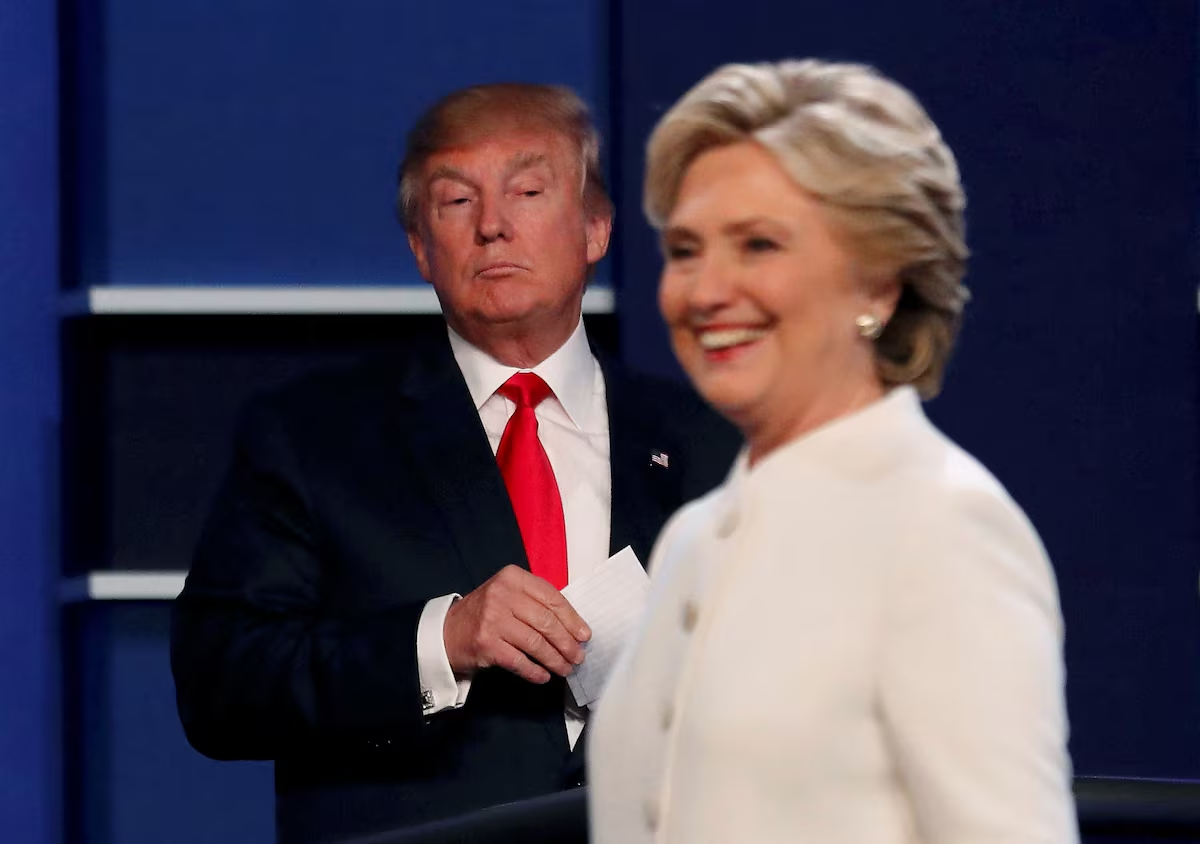
President Donald Trump has asked the U.S. Supreme Court to revive his long-running lawsuit against Hillary Clinton and several others, renewing a legal battle over allegations linked to his 2016 presidential campaign.
In a filing submitted on October 9, Trump and his lawyers challenged lower-court decisions that dismissed the lawsuit and imposed nearly $1 million in financial sanctions against Trump and one of his attorneys. The Supreme Court has not yet ruled on the request.
What Is Trump’s Lawsuit About?
Trump originally filed the lawsuit in 2022, after leaving office following his 2020 election defeat. The case named Clinton, former FBI Director James Comey, former British intelligence officer Christopher Steele, the Democratic National Committee and other defendants.
The complaint alleged that Clinton and her associates conspired to damage Trump’s political reputation by promoting claims linking his campaign to Russia. It included allegations of racketeering and other forms of unlawful conduct.
Clinton and the other defendants were accused in Trump’s legal filings; those allegations were not established as facts by the lawsuit itself.
Trump won the 2016 presidential election despite losing the national popular vote. The dispute over Russia-related investigations and claims about the campaign has remained a recurring subject in American politics.
Why Did Lower Courts Reject the Case?
A federal judge in Florida dismissed Trump’s lawsuit, citing multiple legal problems, including the passage of too much time to bring some claims. The judge described the complaint as a lengthy political grievance rather than a legally sufficient case.
The court also ordered Trump and his lead attorney, Alina Habba, to pay nearly $1 million in legal fees and costs. The sanctions were imposed because the judge concluded that the lawsuit relied on frivolous legal theories and improperly used the courts.
In 2025, the Atlanta-based 11th U.S. Circuit Court of Appeals upheld both the dismissal and the sanctions.
Trump’s latest appeal argues that the time limit for bringing the case should have been extended because he delayed filing while serving as president and carrying out his official responsibilities.
His lawyers contend that Supreme Court intervention is necessary to protect the presidency and prevent courts from penalizing lawyers for legal arguments that judges reject.
What Did Investigations Find About Russia?
The lawsuit revisits a contentious chapter of the 2016 election: Russian interference and investigations into contacts involving Trump’s campaign.
A 2019 report by Special Counsel Robert Mueller concluded that Russia interfered in the election in a widespread and systematic manner. The investigation did not establish that members of Trump’s campaign conspired or coordinated with the Russian government in its election-interference activities.
Mueller’s report also documented numerous links between Russia and individuals associated with Trump’s campaign, along with evidence that the campaign expected to benefit from Russia’s efforts.
Trump has repeatedly rejected allegations of improper coordination and has described the Russia investigation as a hoax.
A separate review led by Special Counsel John Durham, released in 2023, criticized aspects of the FBI’s decision-making and said the bureau relied too heavily on information from Trump’s political opponents when opening its investigation.
These findings concern different aspects of the broader controversy and do not, by themselves, establish the allegations made in Trump’s civil lawsuit against Clinton and the other defendants.
What Happens Next?
The Supreme Court will decide whether to take up Trump’s appeal. His filing seeks to overturn the lower courts’ decisions, but the court’s involvement is not guaranteed.
If the justices decline to hear the case, the lower-court rulings and financial sanctions would remain in place. If the court agrees to review it, further proceedings could determine whether the lawsuit can be revived.
The dispute comes as Trump continues his second presidency after winning the 2024 election. It also renews attention on the legal battles and political divisions that have followed the 2016 campaign.
For now, the central question is whether the Supreme Court will reconsider a case that has already been dismissed by a federal judge and an appeals court.
Source: Reuters, October 9, 2026.