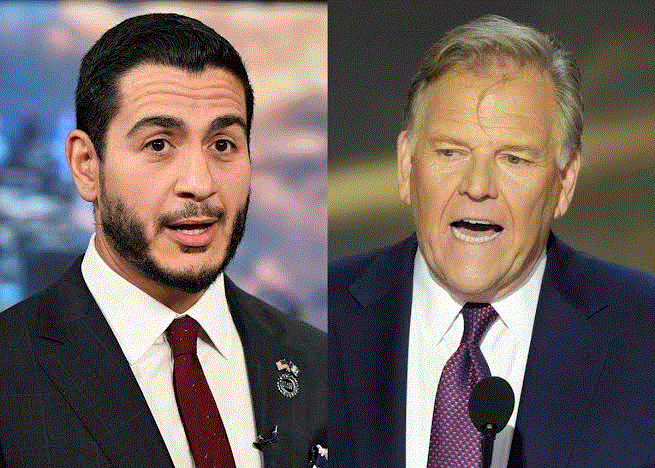
Sparks Fly as Abdul El-Sayed and Mike Rogers Clash in Heated Michigan Senate Debate
Michigan’s closely watched U.S. Senate race took a dramatic turn on October 8 as Democratic nominee Abdul El-Sayed and Republican Mike Rogers faced off in a heated debate filled with sharp criticism, personal jabs and major policy disagreements.
The candidates repeatedly interrupted one another during the televised event in Grand Rapids, sometimes continuing their arguments even during a commercial break. Their exchanges highlighted the deep divisions shaping the race for Michigan’s open Senate seat.
Personal Attacks Take Over the Debate
Both candidates used the debate to challenge their opponent’s credibility and political judgment.
El-Sayed portrayed Rogers as too closely aligned with President Donald Trump, criticizing his positions on trade and the administration’s handling of the war involving Iran. He also accused Rogers of changing his stance on certain issues for political reasons.
Rogers, meanwhile, attacked El-Sayed’s policy proposals and questioned whether the Democrat could deliver on his campaign promises. He described El-Sayed’s economic agenda as unrealistic and argued that some of his proposals would impose additional costs on Americans.
The exchange grew particularly tense when Rogers raised questions about El-Sayed’s family and possible connections to organizations associated with terrorism. El-Sayed challenged Rogers to make his accusations directly rather than rely on insinuations.
Such claims should be assessed carefully: allegations involving a relative or an organization do not, by themselves, establish wrongdoing by a political candidate.
Iran War and Rising Costs Become Key Issues
The war involving Iran was one of the debate’s most important subjects, particularly because rising energy costs have become a concern for voters.
El-Sayed criticized the conflict and argued that the United States should focus its resources on domestic priorities rather than overseas military operations. He linked the war to higher costs affecting American households.
Rogers, who had previously supported aspects of the administration’s approach, also called for the conflict to end swiftly. Their disagreement centered on responsibility for the war and how the United States should respond.
The candidates also discussed the possibility of pausing the federal gas tax as a way to offer relief to drivers. Although they expressed support for a pause, they differed over the underlying causes of high fuel prices and the broader economic policies needed to address them.
Trade With Canada Sparks Another Clash
Trade policy provided another flashpoint. Michigan’s economy has strong ties to Canada, making tariffs and cross-border commerce especially important to the state.
Rogers has recently distanced himself from some of Trump’s tariff policies and called for an end to the trade dispute with Canada. El-Sayed seized on the change, accusing his opponent of shifting positions because of political pressure.
Rogers defended his approach, while the candidates continued to disagree over which policies would best protect American workers and reduce household costs.
Immigration and Healthcare Divide the Candidates
The debate also exposed stark differences over immigration enforcement and healthcare.
El-Sayed has called for abolishing Immigration and Customs Enforcement, arguing that the agency’s current approach has caused harm. Rogers criticized certain enforcement tactics, including highly visible operations, while maintaining that immigration laws should be enforced.
On healthcare, El-Sayed supported a more expansive government role, including Medicare for All. Rogers argued that the proposal would be costly and could disrupt private insurance arrangements.
The exchange reflected a broader disagreement about the role of government, the cost of public programs and how best to support working families.
A Crucial Contest for Senate Control
The debate is part of a competitive campaign to fill the Senate seat being vacated by Democratic Senator Gary Peters. The outcome could help determine which party controls the chamber after the November midterm elections.
With both candidates attempting to define their opponent before voters make their choice, the confrontational debate offered a preview of the campaign’s next stage.
The candidates are expected to face off again later in October, giving both another opportunity to explain their policies and appeal to undecided voters.
For Michigan voters, the central question remains which candidate offers the most convincing plan for addressing the economy, healthcare, immigration and America’s role abroad.